
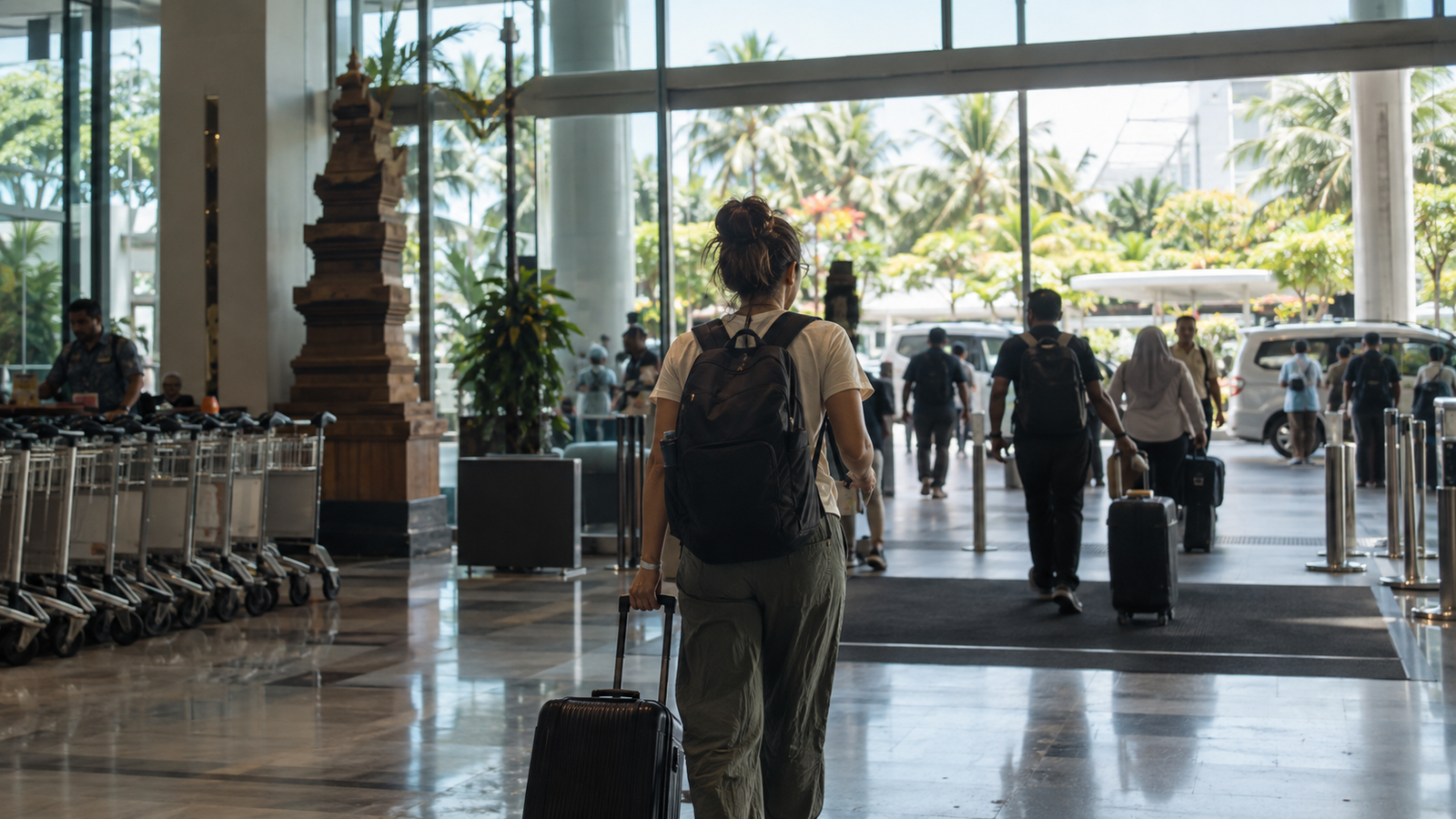

For many travelers, Bali is the first place that comes to mind when they think about Indonesia.
There is a good reason for that. The island brings together beaches, temples, rice terraces, food, culture, and a well-developed travel scene within a relatively small area.
But Bali is only one part of a country made up of thousands of islands.
Travel beyond it and Indonesia begins to look very different.
There are volcanic landscapes across Java, rugged islands around Flores, mountain trails in Lombok, rainforest rivers in Borneo, and highland cultures surrounded by extraordinary marine environments in Sulawesi.
Each region has its own rhythm, scenery, and reason to visit.
If you are ready to see more of Indonesia, these are some of the places worth exploring beyond Bali.
Java: Volcanoes, Culture and Overland Adventure
Java is one of the best places to begin exploring Indonesia beyond Bali.
The island combines large cities, historic sites, traditional communities, agricultural landscapes, waterfalls, and some of the country’s most dramatic volcanoes.
What makes Java especially interesting is how naturally these experiences can connect during an overland journey.
In Central Java and Yogyakarta, travelers can explore historic temples, local markets, traditional arts, and cultural landmarks before continuing east toward increasingly dramatic natural landscapes.
As the journey moves into East Java, volcanoes begin to dominate the scenery.
Mount Bromo offers one of the region’s most recognizable landscapes, with its huge volcanic caldera, Mount Batok, surrounding ridges, and distant peaks.
The experience often begins before sunrise, when travelers head into the highlands while the surrounding landscape is still dark.
As the sky brightens, the scale of the Tengger volcanic landscape slowly becomes visible.
Further east, Kawah Ijen offers a very different experience. Travelers hike toward the crater in the early morning darkness, with the possibility of seeing its unusual blue flame phenomenon under suitable conditions.
Java also has experiences that have nothing to do with volcanoes.
Tumpak Sewu brings travelers into a steep tropical valley filled with waterfalls, vegetation, mist, and flowing water.
The combination of cultural experiences and dramatic landscapes makes Java ideal for travelers who want their journey to constantly change.
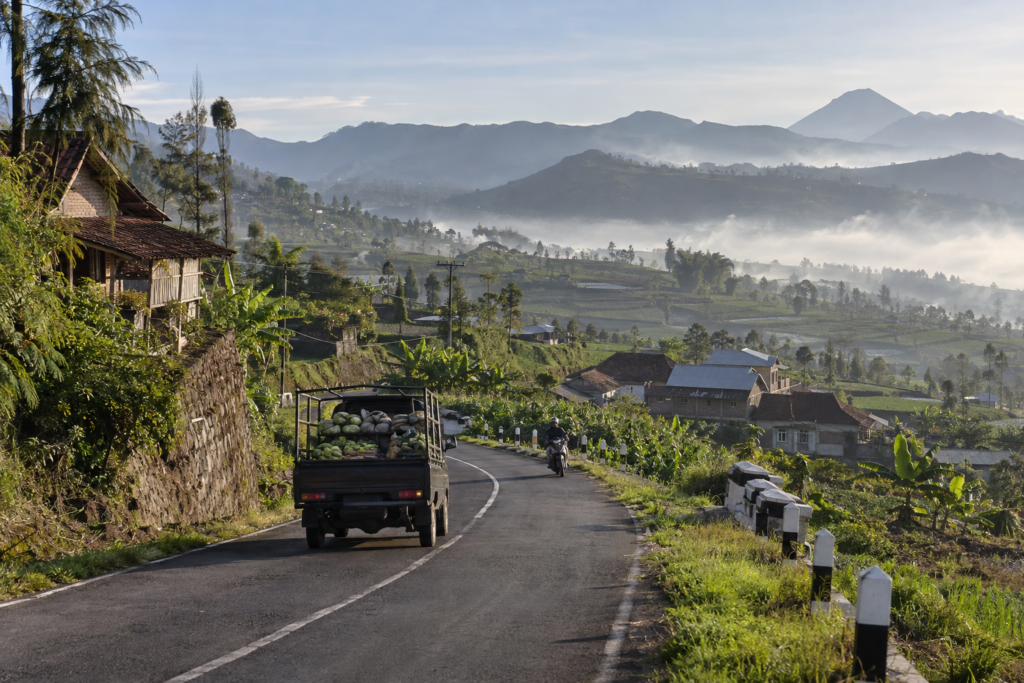
Instead of flying directly between famous attractions, traveling through Java allows the places between them to become part of the experience.
Flores and Komodo: Explore Indonesia From the Water
Travel farther east and Indonesia begins to feel completely different.
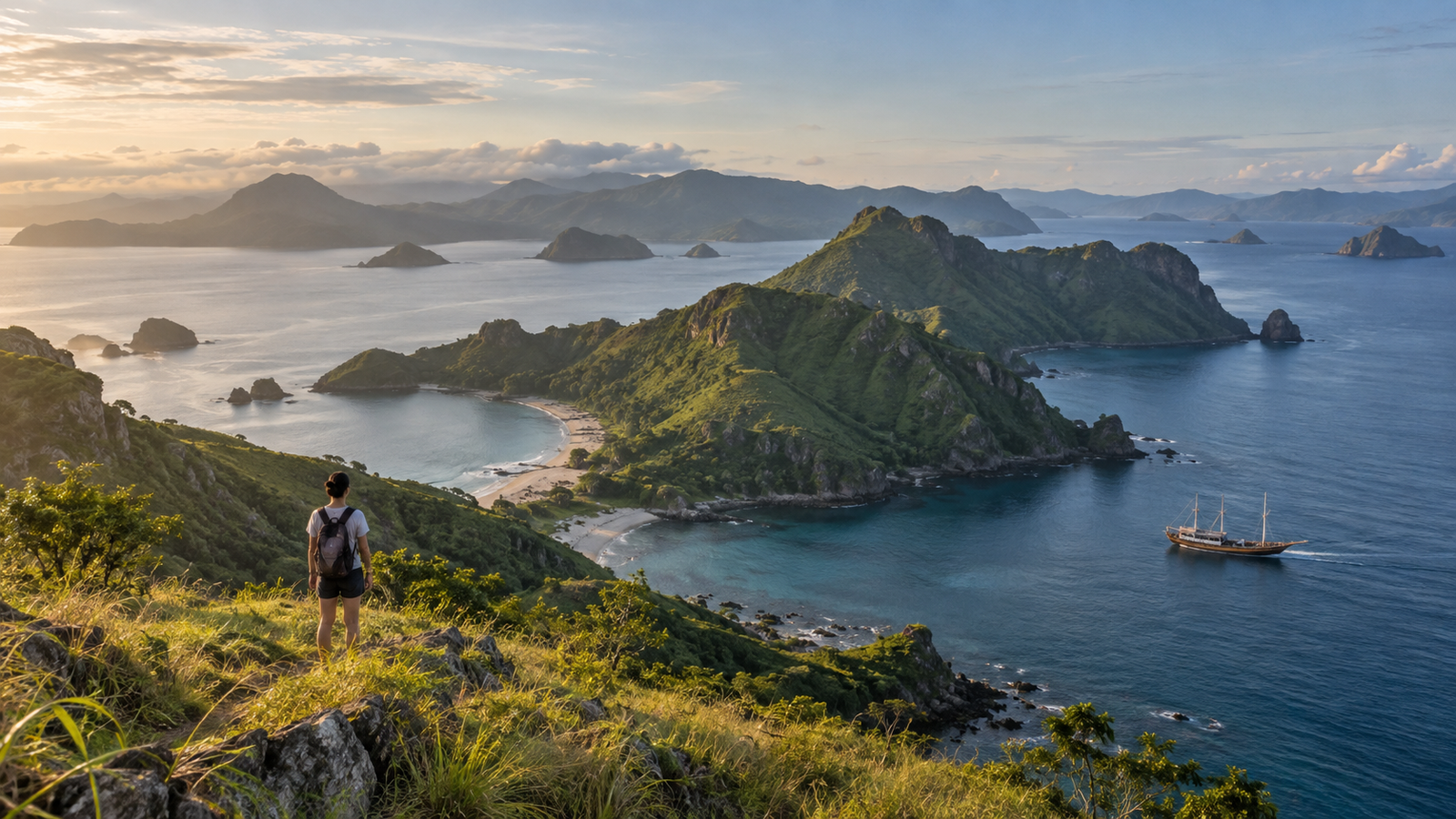
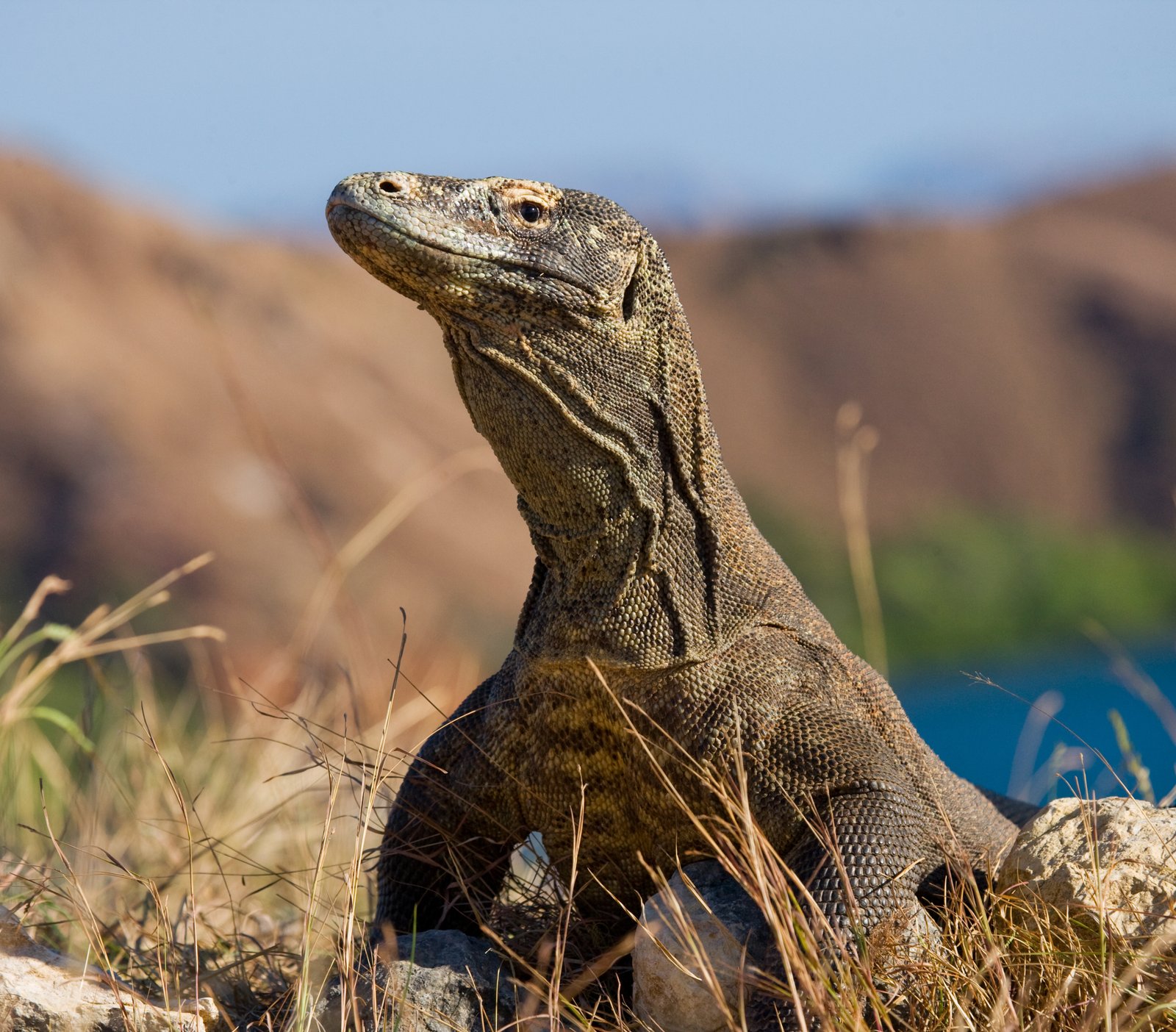
Flores has rugged coastlines, mountainous terrain, island communities, volcanic landscapes, and access to one of the country’s most famous protected areas, Komodo National Park.
For many travelers, Labuan Bajo becomes the starting point.
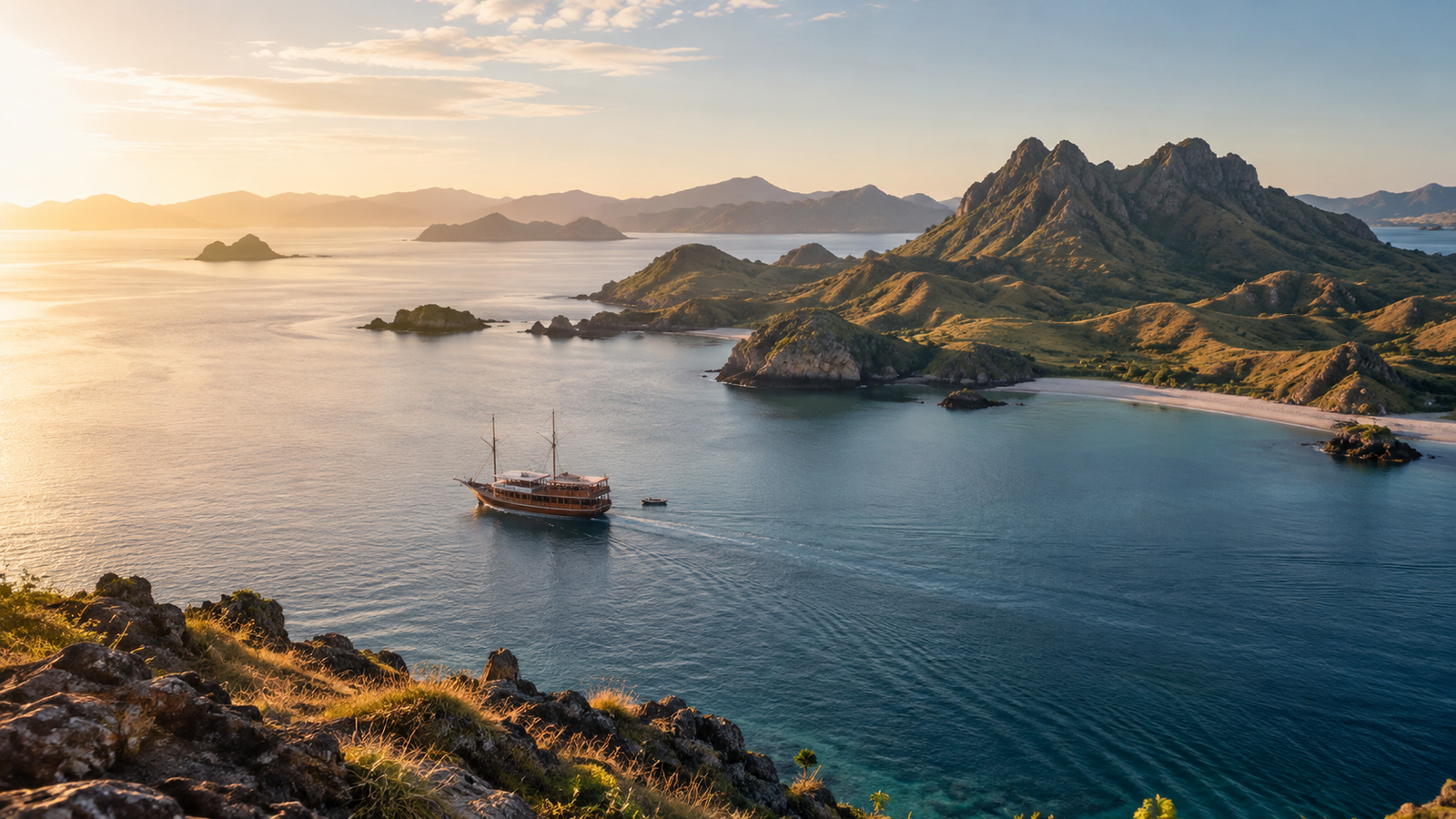
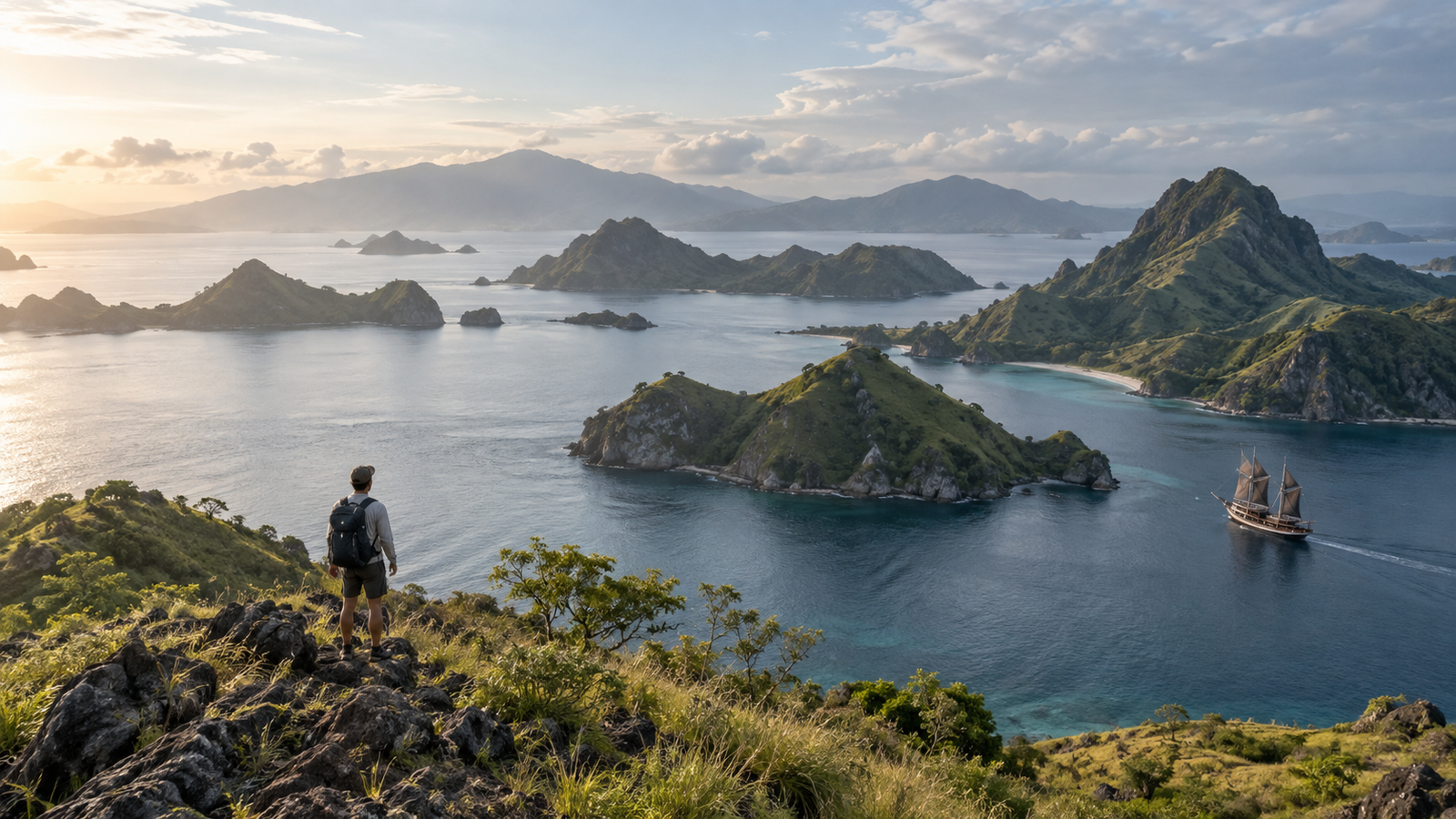
From the harbor, boats travel through an archipelago of dry hills, rocky coastlines, beaches, snorkeling areas, and wildlife habitats.
Komodo dragons are the region’s most famous residents, but they are only one reason to visit.
The wider national park offers some of Indonesia’s most distinctive island landscapes.
Padar Island is known for its elevated viewpoints across several bays, while other stops can include snorkeling areas, beaches, marine environments, and islands that feel completely different depending on the season and light.
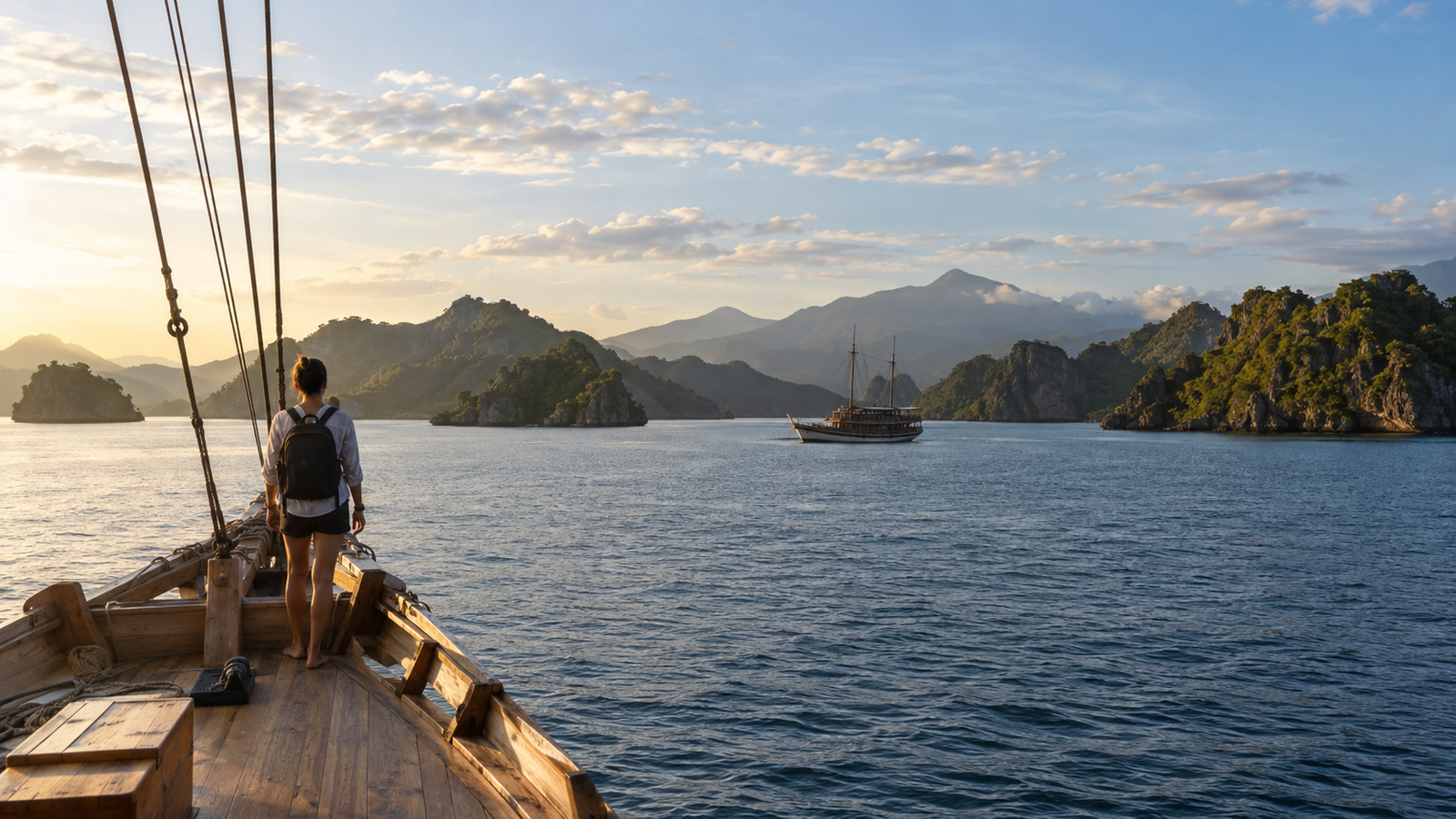
One of the best ways to experience the area is by spending several days aboard a boat.
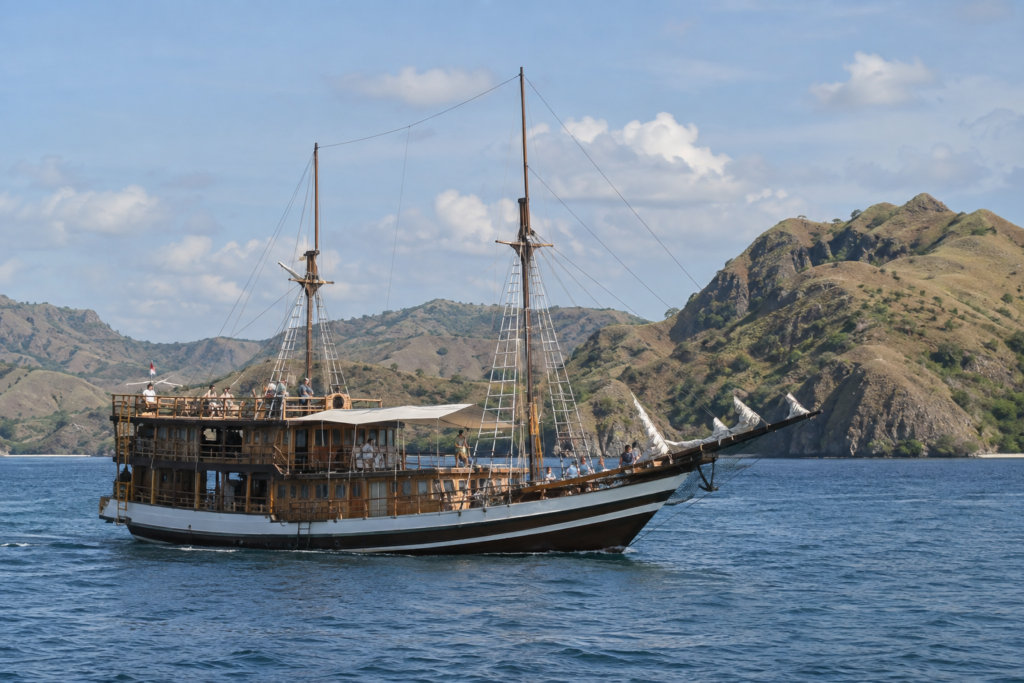
A multi-day sailing journey changes the usual rhythm of travel.
You do not simply take transportation to an attraction and return to a hotel afterward.
The boat becomes part of the experience.
You wake up surrounded by islands, travel while having breakfast, stop to hike or snorkel during the day, and watch another landscape appear as the boat continues through the park.
Flores also extends far beyond Labuan Bajo.
Travel inland and the scenery shifts toward mountains, villages, agricultural landscapes, and communities with their own traditions.
For travelers who have already experienced Bali’s beaches and coastal tourism, Flores offers a different kind of island journey.
Lombok: Mountains, Coastlines and a Slower Rhythm
Lombok sits close to Bali geographically, but the experience can feel surprisingly different.
The island combines tropical beaches, rolling hills, local villages, smaller offshore islands, and the enormous presence of Mount Rinjani.
For travelers looking for a slower alternative to some of Bali’s busier areas, Lombok can be an easy next step.
The coastline offers space for beach days, surfing, snorkeling, and exploring smaller islands.
Move inland and the landscape changes.
Mount Rinjani rises 3,726 meters above sea level and dominates much of northern Lombok.
For trekkers, the mountain offers one of Indonesia’s major multi-day hiking experiences.
Inside the huge crater lies Segara Anak, a lake surrounded by steep volcanic walls, with a younger volcanic cone rising within the crater area.
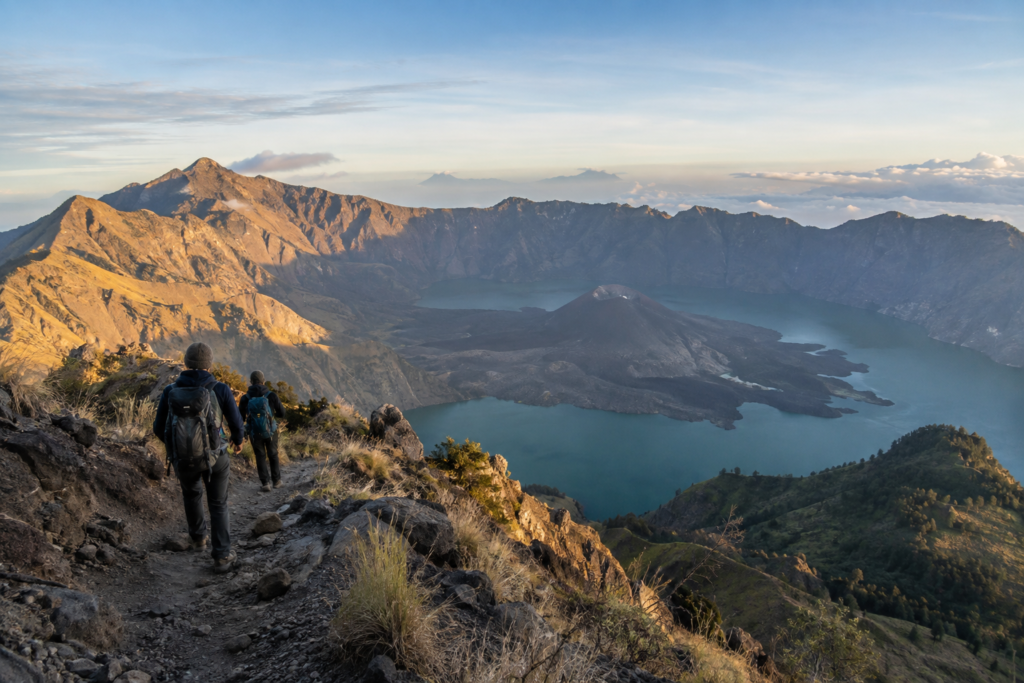
The trek can be physically demanding, which means Lombok works especially well when active mountain days are combined with slower coastal experiences.
Beyond the natural scenery, Lombok is also home to Sasak communities whose traditions remain part of everyday island life.
This combination gives Lombok its own identity.
It is close enough to Bali to fit naturally into a longer journey, but different enough to feel like a new destination.
Borneo: Slow Down in the Rainforest
If Java, Flores, and Lombok are defined by mountains and islands, Borneo offers another kind of adventure entirely.
In Central Kalimantan, Tanjung Puting National Park is explored largely from the water.
Travelers board a traditional wooden riverboat known as a klotok and move slowly along rivers surrounded by dense tropical forest.
The pace immediately changes.
There are no mountain roads to rush along and no need to change accommodation every evening.
Instead, the river becomes the route and the boat becomes part of the experience.
Along the journey, travelers can visit orangutan feeding areas and explore sections of rainforest while keeping watch for wildlife around the riverbanks and trees.
Travel With Dee’s current Tanjung Puting route includes Tanjung Harapan, Pondok Tanggui, and Camp Leakey, together with river cruising, rainforest exploration, and overnight stays aboard the klotok.
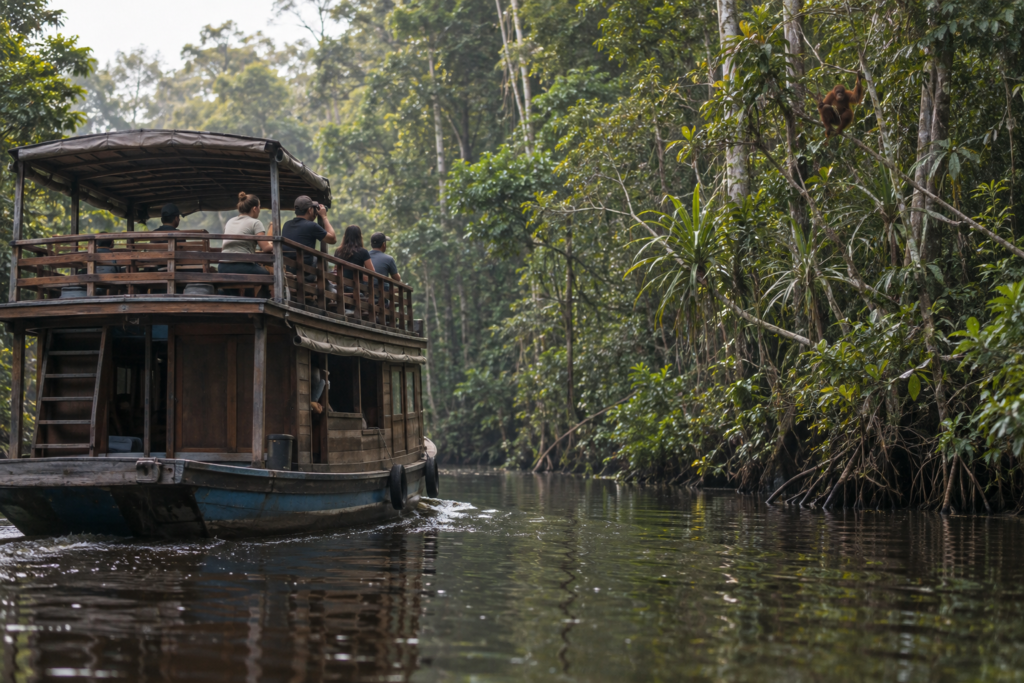
The atmosphere is very different from Indonesia’s coastal destinations.
Dense vegetation replaces open ocean.
The sound of the river and forest replaces traffic.
Evenings are spent aboard the boat rather than returning to a resort or city hotel.
For travelers interested in wildlife, rainforest, and slower forms of travel, Borneo can become one of the most distinctive parts of an Indonesia journey.
Sulawesi: Culture, Highlands and Marine Life
Sulawesi is another destination that shows just how diverse Indonesia can be.
Its unusual geography connects long coastlines, islands, forests, highlands, and communities with very different traditions.
A trip here can take several forms.
Travelers interested in marine environments can explore areas known for diving, snorkeling, reefs, and island landscapes.
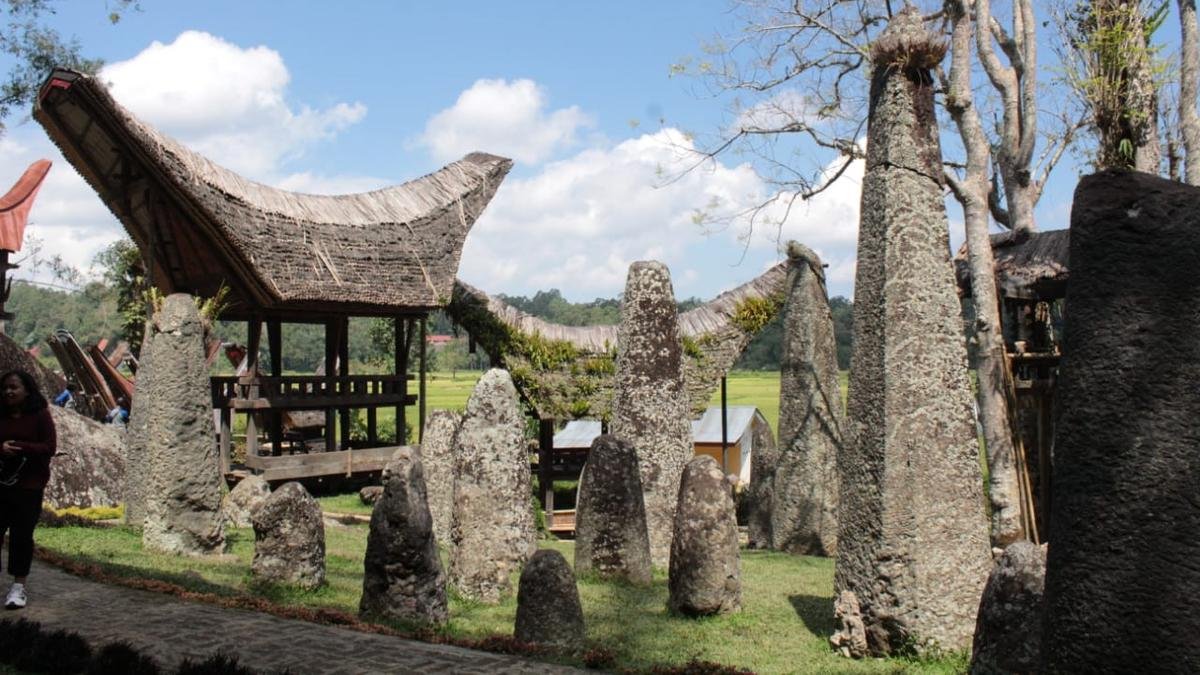
Those who prefer cultural journeys can travel into the highlands of Toraja.
Toraja is known for its distinctive architecture, strong ancestral traditions, villages, agricultural landscapes, and ceremonies that remain an important part of local culture.
Because these regions can be far apart, Sulawesi is often better explored slowly rather than treated as one destination that needs to be completed quickly.
Travel With Dee currently highlights Sulawesi for its combination of Torajan culture, highland landscapes, islands, and marine biodiversity.
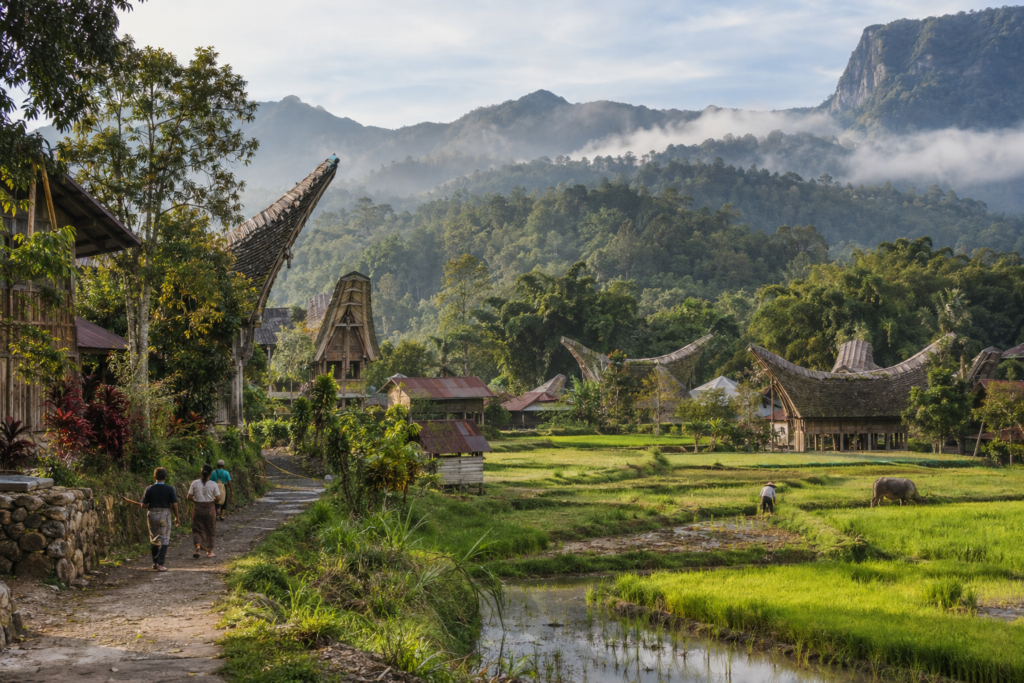
This variety makes Sulawesi particularly interesting for travelers who want to move beyond Indonesia’s most familiar travel routes.
It does not offer one single defining experience.
Instead, the attraction comes from how different one part of the island can feel from another.
You Do Not Have to Choose Only One
Exploring Indonesia beyond Bali does not necessarily mean leaving Bali out of your journey.
Bali is extremely useful as part of a larger route.
Its transport connections, accommodation options, cultural experiences, and location make it possible to combine the island naturally with other regions.
A longer journey might begin in Java, move east through Bromo and Ijen, cross into Bali, and continue toward Flores and Komodo.
Travel With Dee currently uses a similar flow in its Java, Bali, and Flores discovery itinerary, connecting Yogyakarta, Tumpak Sewu, Bromo, Ijen, Bali, and a Komodo cruise.
Another traveler might combine Bali with Lombok.
Someone interested in wildlife could make Borneo the main focus and use Java or Bali as another part of the trip.
The point is not to avoid Bali.
It is to recognize that Bali can be one chapter of a much larger Indonesia journey.
Which Destination Is Right for You?
The best place to explore next depends on what you want from the trip.
Choose Java if you want a mixture of culture, volcanoes, waterfalls, cities, and overland travel.
Choose Flores and Komodo if you want sailing, snorkeling, wildlife, rugged islands, and time on the water.
Choose Lombok if you want beaches, trekking, mountain scenery, and a quieter island atmosphere.
Choose Borneo if rainforest, orangutans, wildlife, river journeys, and slower travel appeal to you.
Choose Sulawesi if you want a combination of strong local culture, highland landscapes, islands, and marine experiences.
There is no single destination that represents Indonesia.
That is exactly what makes exploring beyond Bali so rewarding.
Give Each Region Enough Time
Indonesia can look smaller on a map than it feels while traveling.
Moving between islands can involve domestic flights, ferries, road transfers, boats, and changing local schedules.
Trying to visit too many regions in one trip can quickly turn an exciting itinerary into a series of transfers.
If you only have a week, choosing one region beyond Bali may create a better experience than trying to see several.
With more time, two or three contrasting regions can work extremely well together.
For example, Java and Flores offer a strong contrast between overland volcano travel and island sailing.
Lombok and Flores can create a journey focused on mountains, coastlines, and the sea.
Borneo works well when you want the rainforest portion of the trip to feel completely different from everything else.
The goal should not be collecting destinations.
Give yourself enough time to understand what makes each place different.
Look Beyond the Famous Viewpoint
Some of the best travel experiences happen between the places that appear on postcards.
A road through Java can reveal villages, farms, markets, and mountain scenery that were never part of the original itinerary.
A long boat journey gives you time to watch islands slowly appear and disappear on the horizon.
A quiet afternoon in Lombok may become more memorable than another crowded viewpoint.
In Borneo, hours spent moving slowly along a rainforest river are part of the attraction rather than simply transportation.
Travel becomes more interesting when every moment does not need to be a major attraction.
Sometimes exploring beyond Bali also means changing the way you travel.
Indonesia Is Bigger Than One Island
Bali is one of Indonesia’s great destinations, but it should not define the entire country.
Travel east, west, or north and the landscapes, cultures, wildlife, food, architecture, and pace of travel can change dramatically.
Java offers volcanoes and cultural history.
Flores opens the door to rugged islands and Komodo National Park.
Lombok combines mountain trekking with tropical coastlines.
Borneo brings you into rainforest ecosystems.
Sulawesi connects marine environments with highland cultures.
These destinations do not compete with Bali.
They reveal how much more there is to Indonesia.
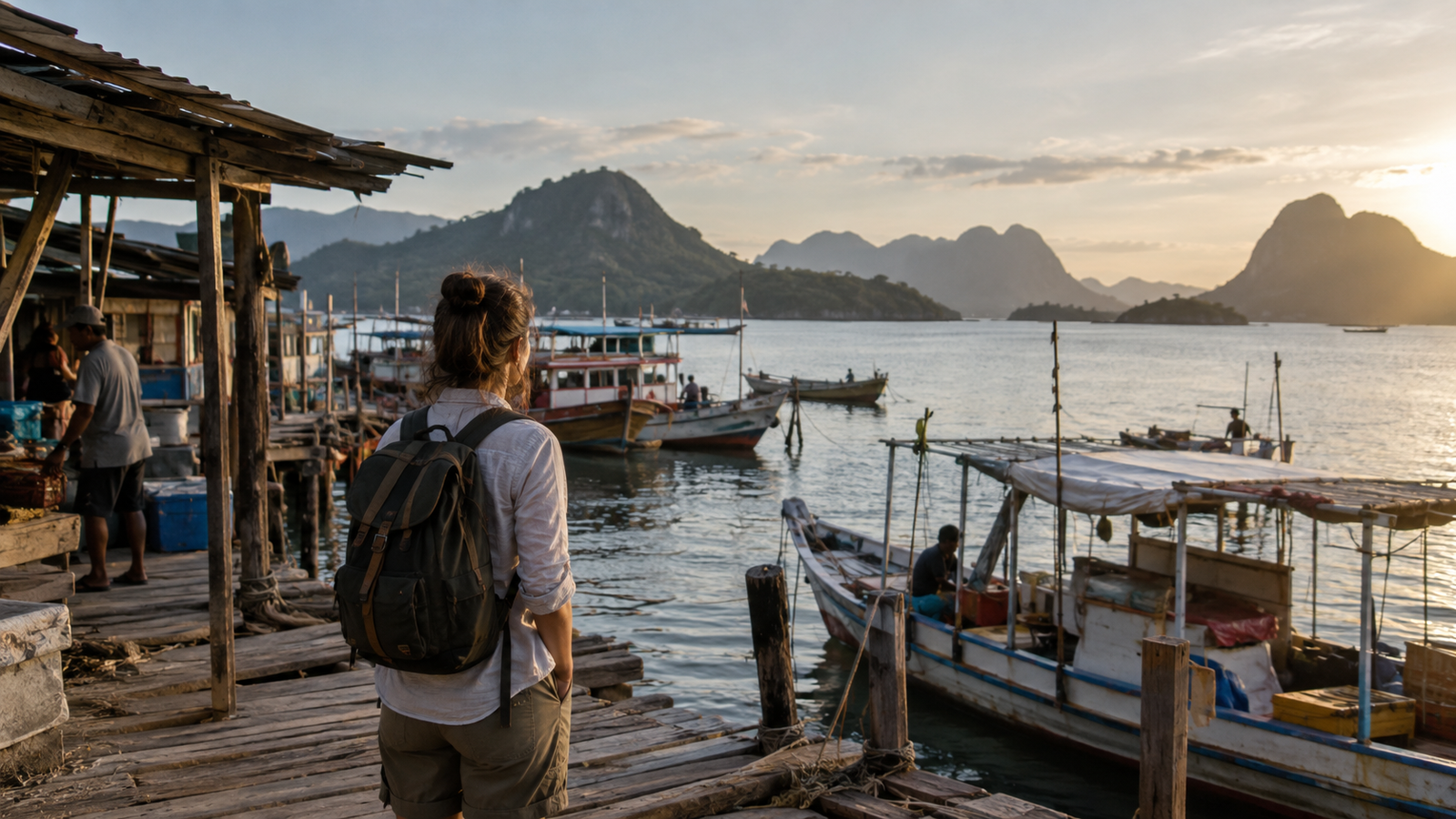
For travelers who are curious enough to keep going, Bali can become the beginning of the journey rather than the end of it.
Explore More of Indonesia With Travel With Dee
The hardest part of traveling beyond Bali is often not deciding where you want to go.
It is connecting the destinations properly.
Travel With Dee currently creates journeys across Java, Bali, Flores, Lombok, Sulawesi, and Borneo, with itineraries designed around travelers’ interests, timing, and preferred pace. The current service also includes support for accommodation, private transportation, domestic flights, ferry and train tickets, local guides, and personalized itinerary planning.
Whether you want to hike volcanoes across Java, sail through Komodo, trek in Lombok, cruise through the forests of Borneo, or explore Sulawesi, there is much more of Indonesia waiting beyond Bali.
Explore available trips at travel-withdee.com or contact Travel With Dee on WhatsApp to start planning your journey.