
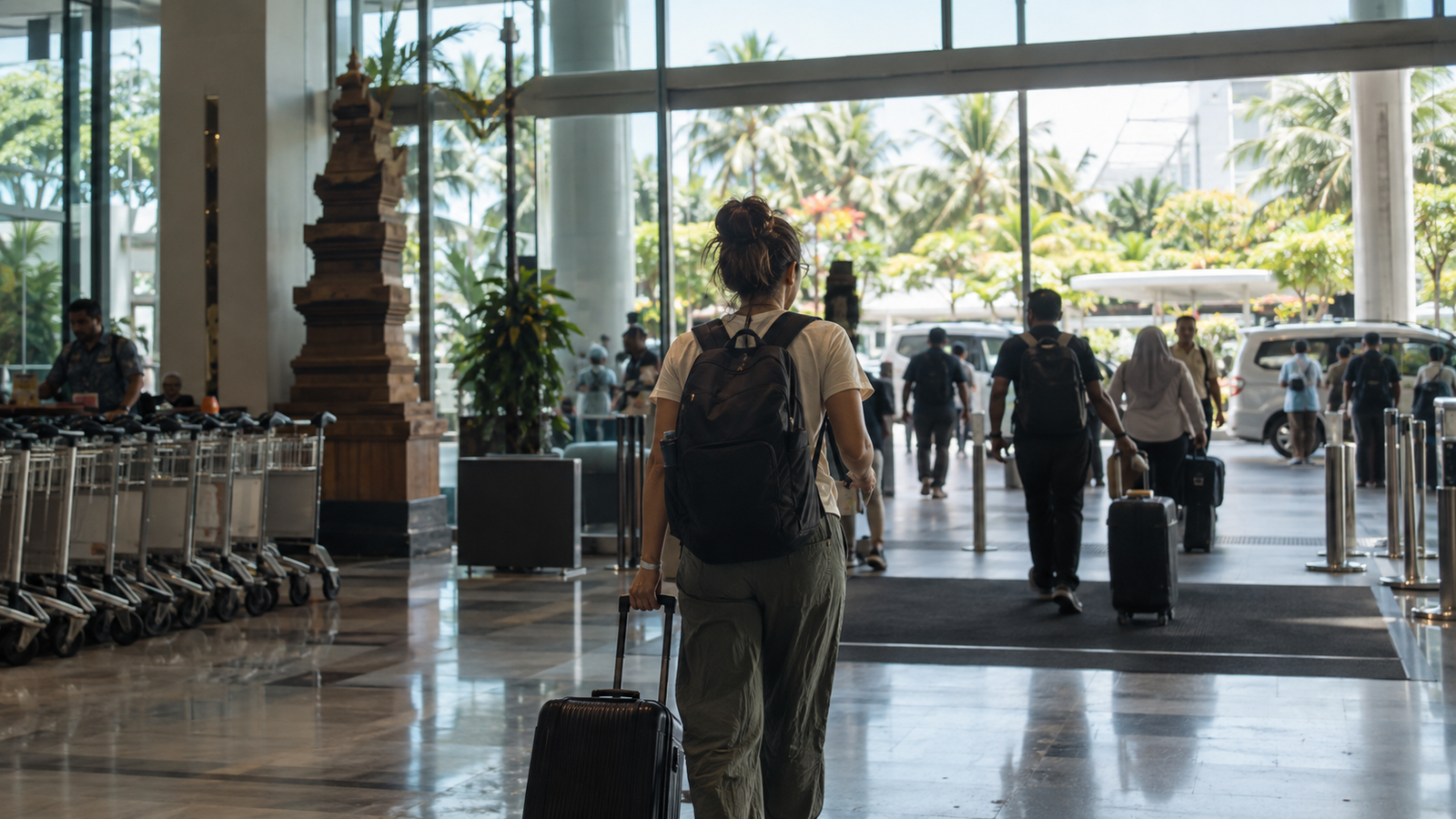
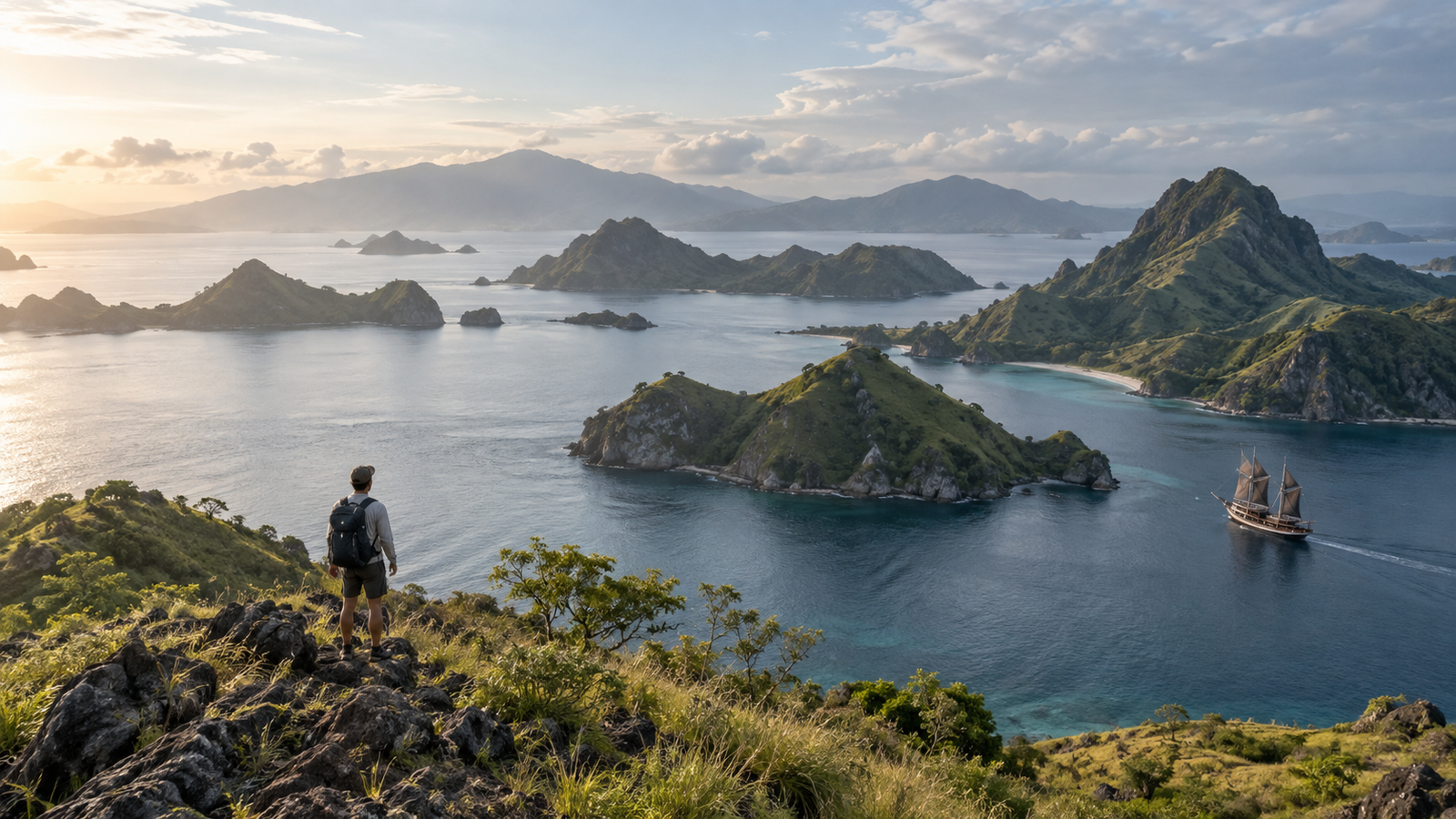
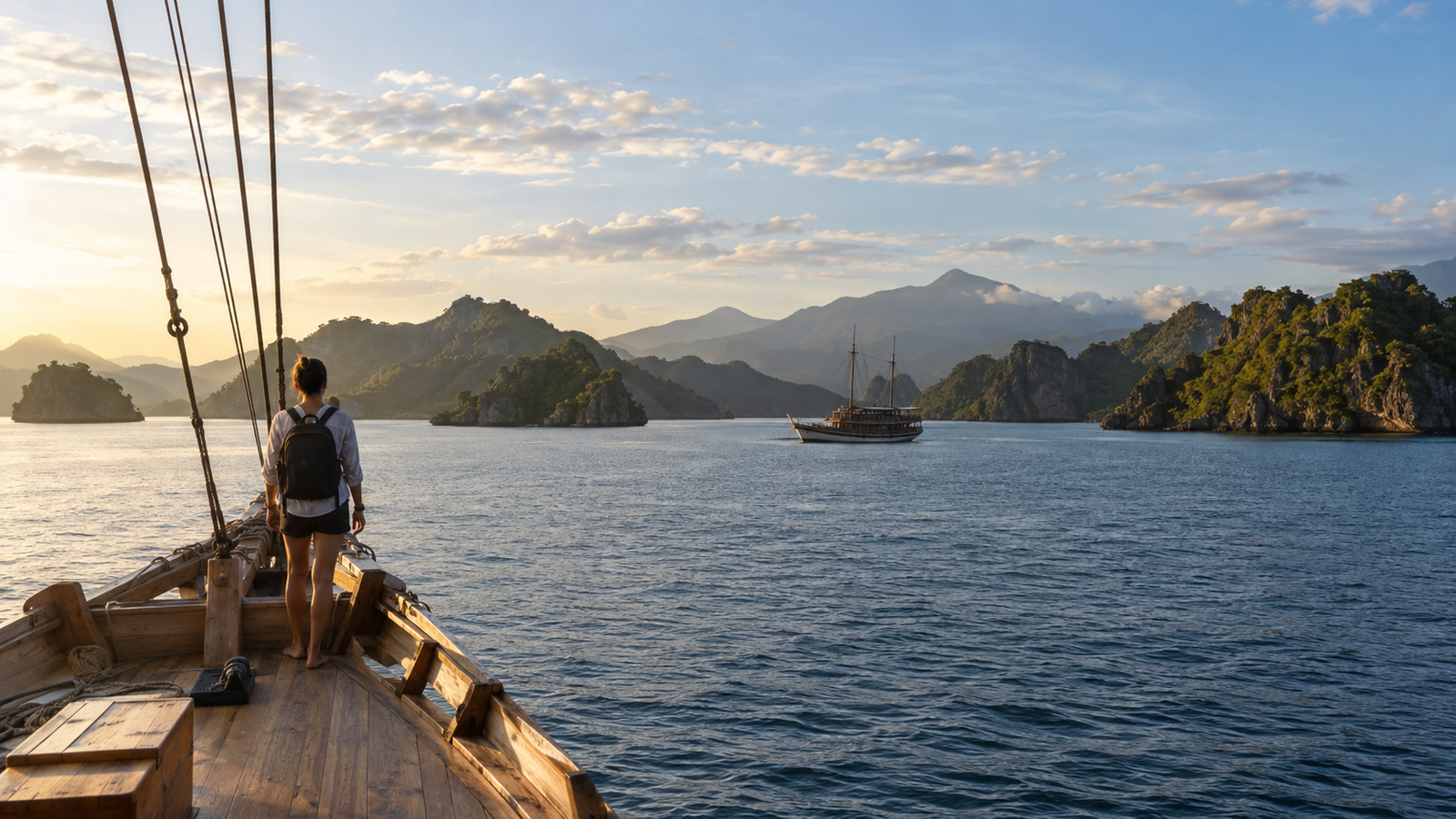
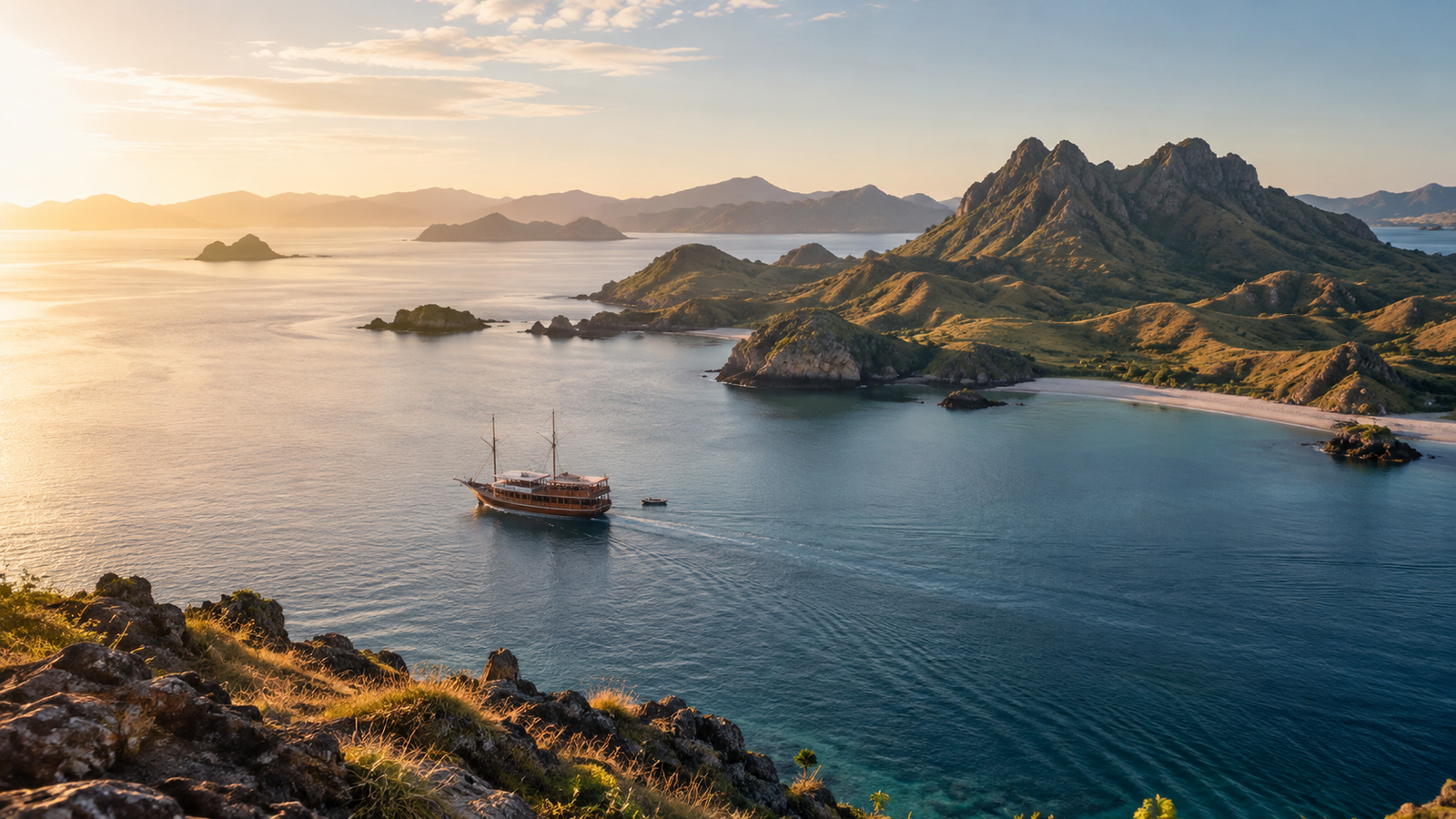

Indonesia is the kind of destination where nature rarely stays the same for long.
Travel across the country and you can move from volcanic mountains to tropical rainforest, from enormous waterfalls to coral reefs, and from quiet island coastlines to rivers surrounded by wildlife.
For nature and adventure travelers, that variety is one of Indonesia’s greatest strengths.
A single journey can include sunrise hikes, snorkeling, wildlife encounters, waterfalls, sailing, mountain trails, cultural villages, and nights spent far away from busy cities.
The experience is not only about reaching famous landmarks. It is about spending time outdoors, moving through different landscapes, and discovering how much the scenery can change from one region to another.
Nature Changes Everywhere You Go
Indonesia stretches across a huge archipelago, and each region has its own character.
Java is dominated by volcanic landscapes, fertile highlands, waterfalls, villages, and historic cities.
Bali combines tropical coastlines with rice terraces, waterfalls, temples, and inland mountain scenery.
Lombok brings together beaches, rolling hills, traditional Sasak communities, and the dramatic presence of Mount Rinjani.
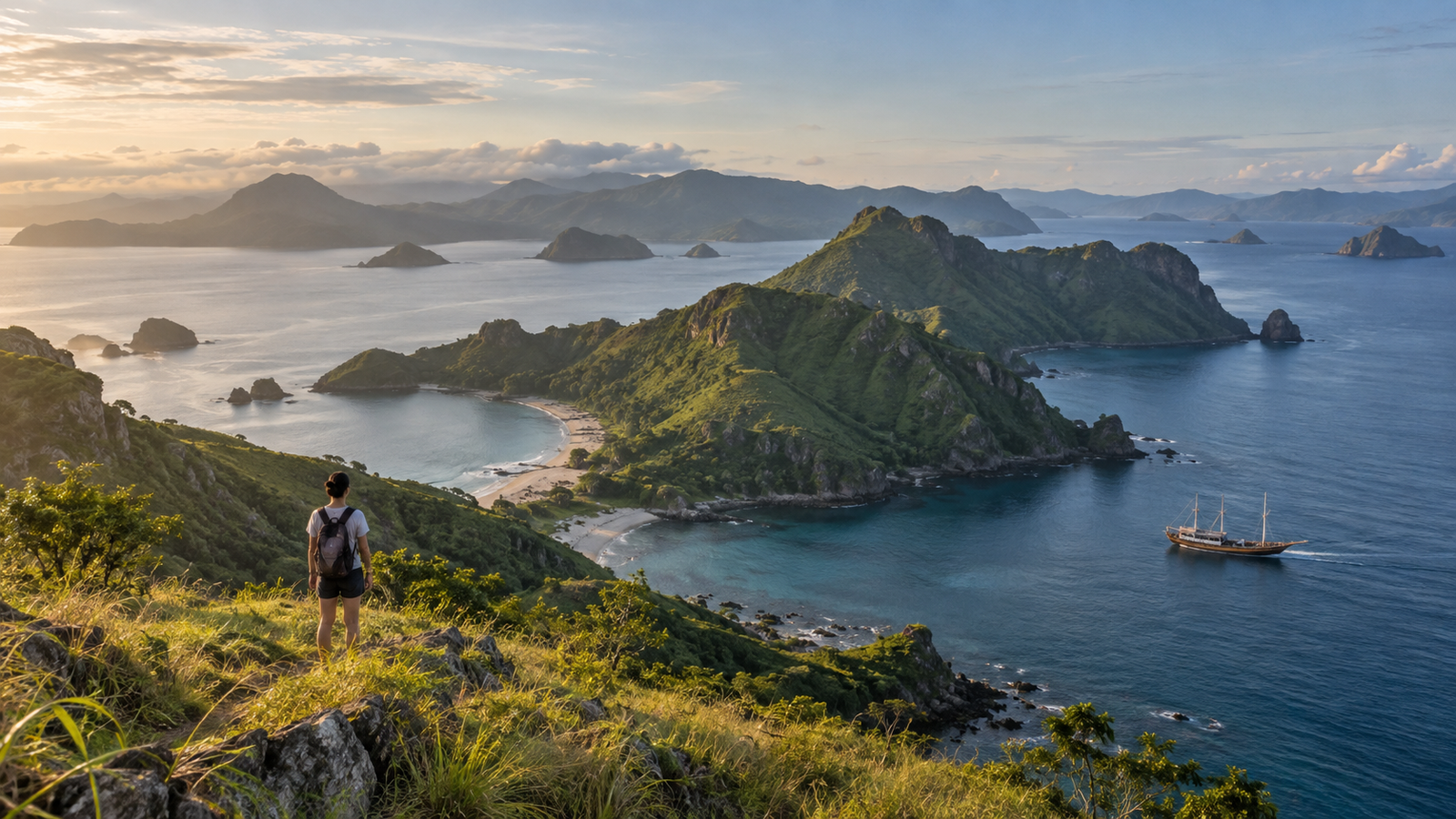
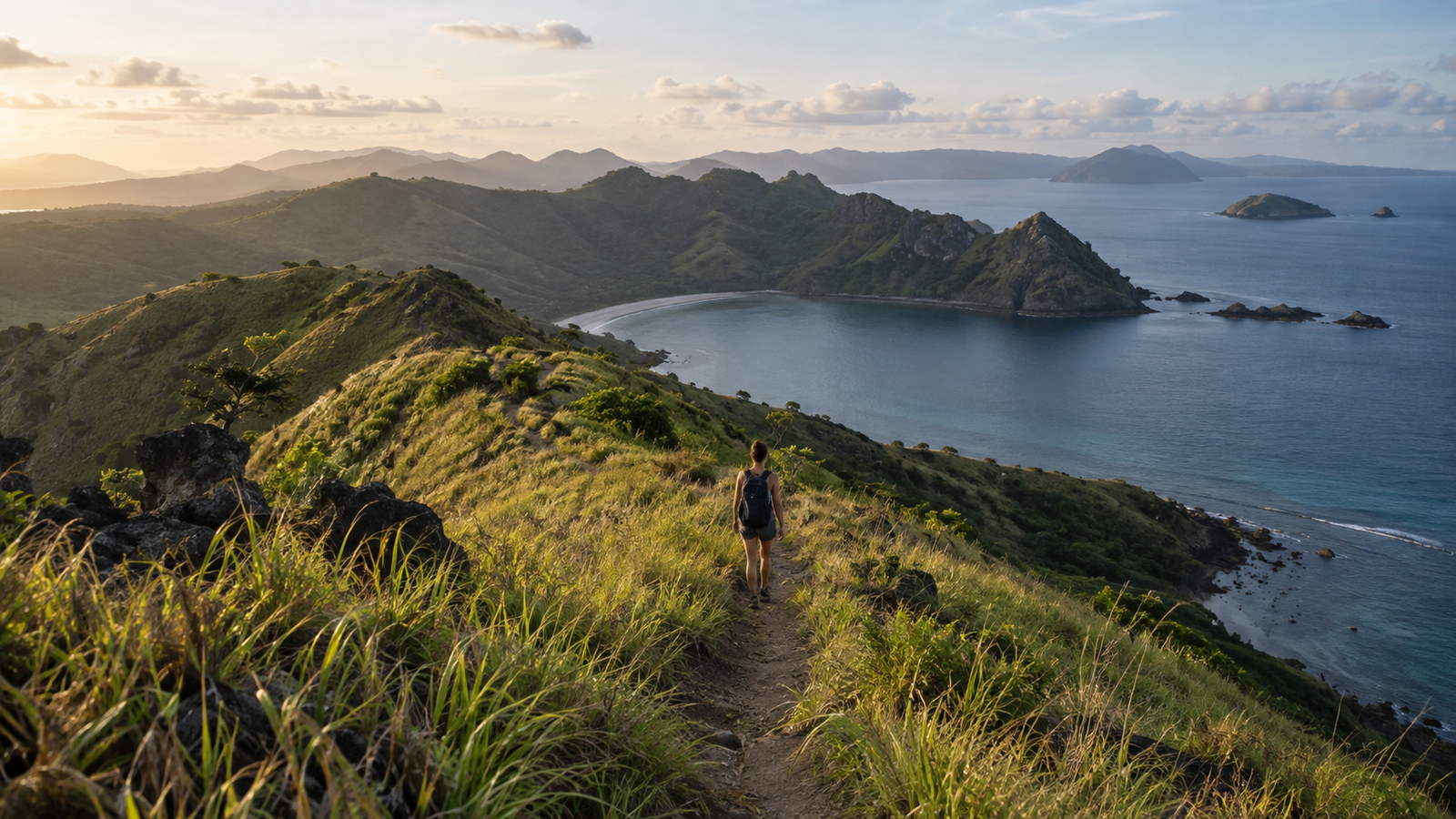
Travel farther east toward Flores and Komodo, and the scenery becomes drier and more rugged. Hills rise directly from the sea, islands sit scattered across open water, and coral reefs surround many of the coastlines.
Borneo changes everything again. Roads and volcanic mountains give way to tropical rivers, peat forests, dense vegetation, and wildlife.
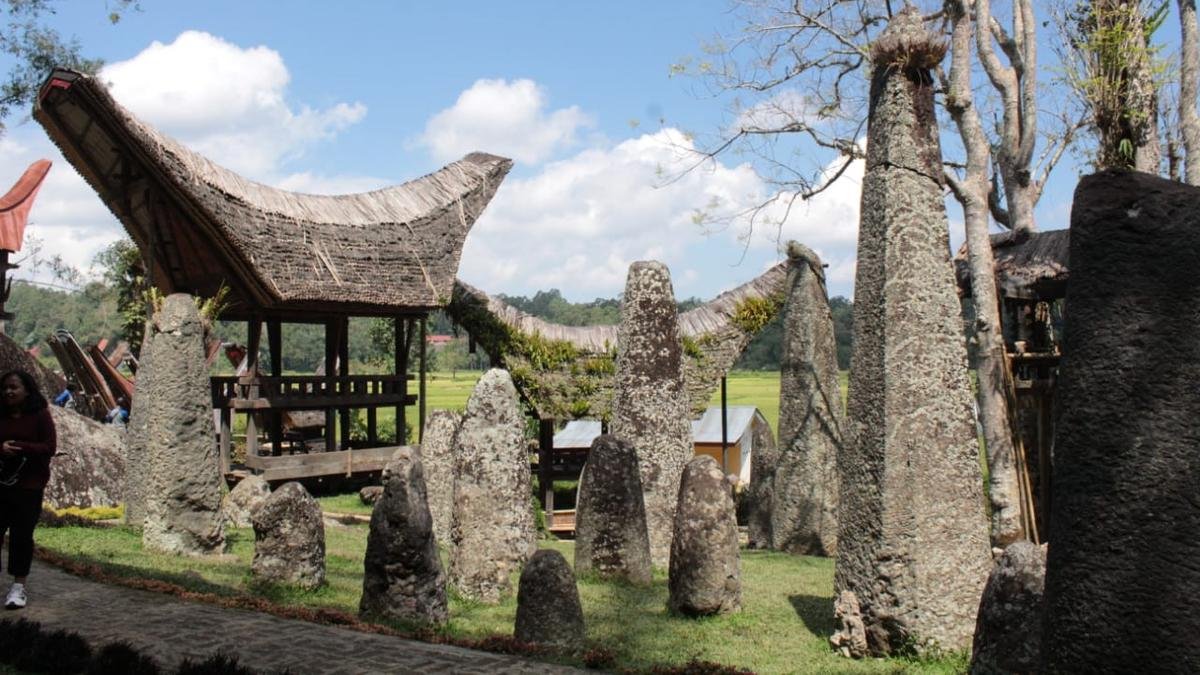
Sulawesi adds another combination of highland landscapes, marine environments, wildlife, islands, and distinctive local cultures.
For travelers who enjoy being outside, this means one Indonesia trip does not have to revolve around one kind of landscape.
Volcanoes Turn Hiking Into an Experience
Indonesia’s volcanic geography creates some of its most memorable outdoor adventures.
In East Java, travelers can experience several volcanic environments within a relatively compact region.
Mount Bromo is known for its enormous caldera and early morning views across the surrounding peaks. The journey often begins before sunrise, when temperatures are cooler and much of the landscape is still hidden in darkness.
As daylight arrives, the scale of the volcanic terrain slowly becomes visible.
Kawah Ijen offers another kind of adventure.
The trail begins in darkness for travelers hoping to reach the crater area before sunrise. Under the right conditions, visitors may witness Ijen’s famous blue flame phenomenon before morning light reveals the surrounding crater landscape.
Lombok offers a much longer mountain experience.
Mount Rinjani rises 3,726 meters above sea level and rewards trekkers with views across an enormous volcanic crater and Segara Anak lake.
These places are very different from one another, but they have something in common. You have to become part of the landscape to experience them properly.
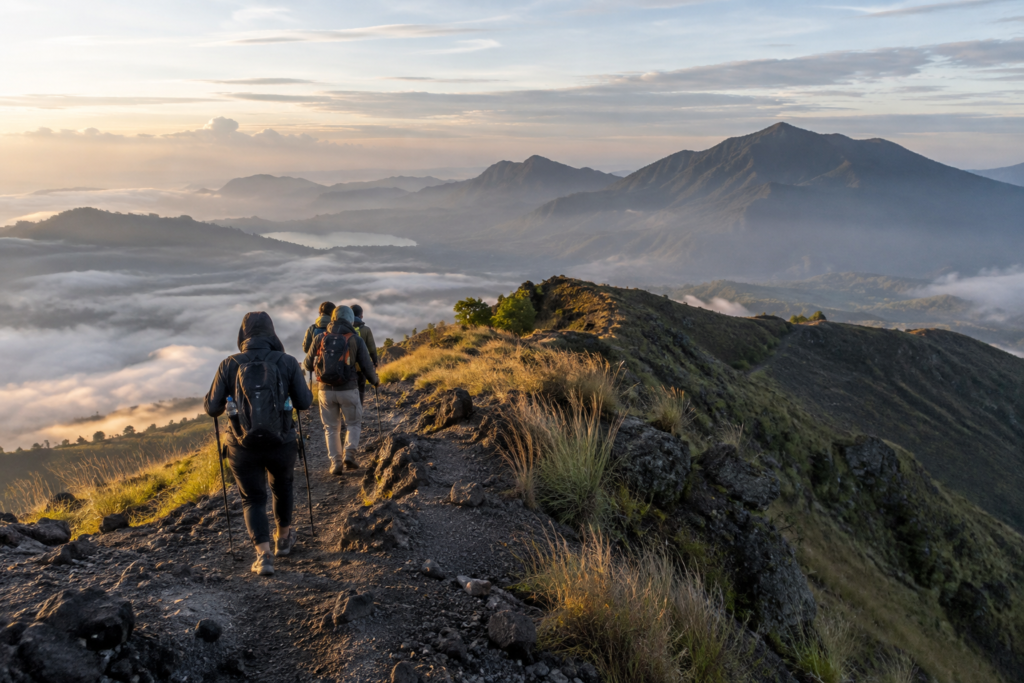
The early wake-up, changing temperature, uneven trails, and changing light all become part of the memory.
For adventure travelers, that often makes the experience more meaningful than simply arriving at a viewpoint by car.
Waterfalls Feel Wild and Immersive
Indonesia’s tropical climate and mountainous geography also create spectacular waterfalls.
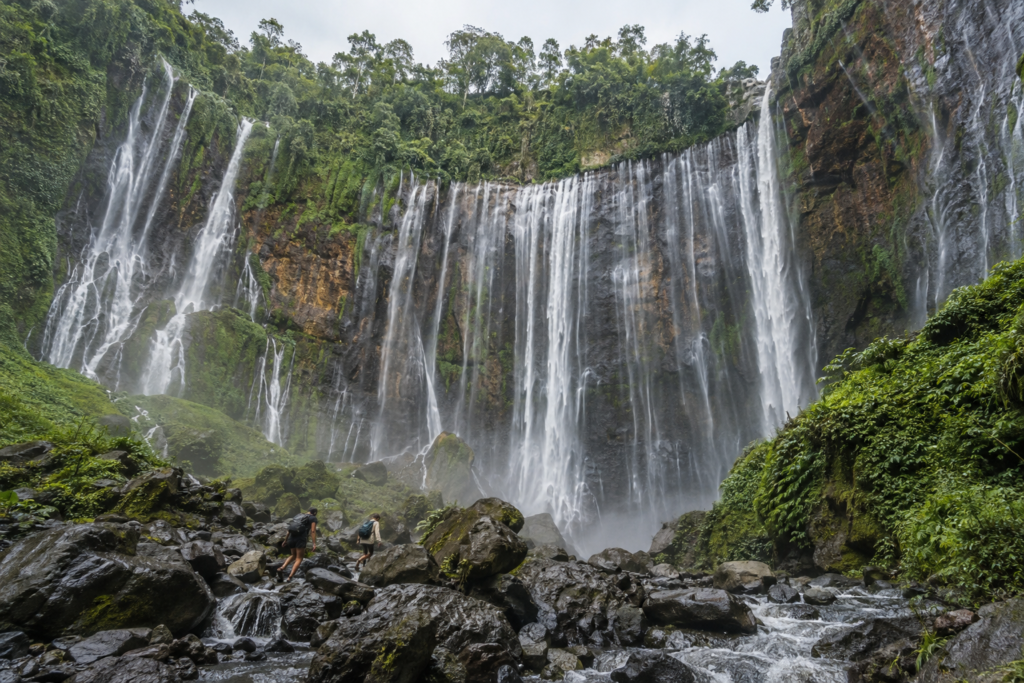
East Java’s Tumpak Sewu is one of the most dramatic examples.
From above, countless streams of water appear to fall into a huge green valley. But the real sense of scale becomes clearer when travelers descend toward the lower area.
The experience becomes more physical as the trail moves past wet rock, flowing water, dense vegetation, and mist.
Instead of observing the waterfall from a distance, you become surrounded by it.
Bali offers a different waterfall experience, with many falls hidden among tropical vegetation, valleys, and villages.
Across Indonesia, waterfalls often provide a useful contrast to volcano trips. One day may involve dry volcanic terrain and cold mountain air, while another takes you into humid forest surrounded by water and tropical plants.
That contrast is part of what makes nature travel here so rewarding.
Wildlife Encounters Can Become Part of the Journey
Indonesia is also home to wildlife experiences that are difficult to find anywhere else.
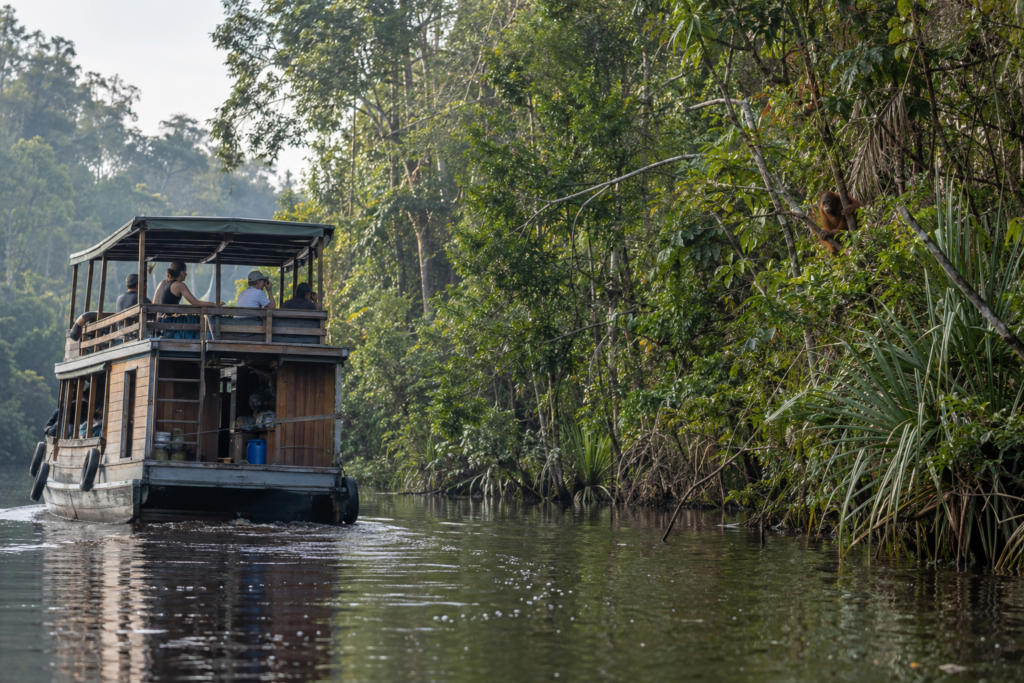
In Central Kalimantan, Tanjung Puting National Park can be explored from a traditional wooden riverboat called a klotok.
The journey follows tropical waterways surrounded by forest. Instead of moving quickly between attractions, travelers spend hours on the river, watching the vegetation and listening for signs of wildlife.
Travel With Dee’s current Tanjung Puting itinerary includes orangutan feeding areas at Tanjung Harapan, Pondok Tanggui, and Camp Leakey, together with rainforest exploration and overnight stays aboard the klotok.
The experience is not limited to seeing orangutans.
Proboscis monkeys, macaques, birds, and other wildlife may also be encountered around the forest and river environment.
Sleeping aboard the klotok keeps you inside the landscape even after the day’s activities have finished.
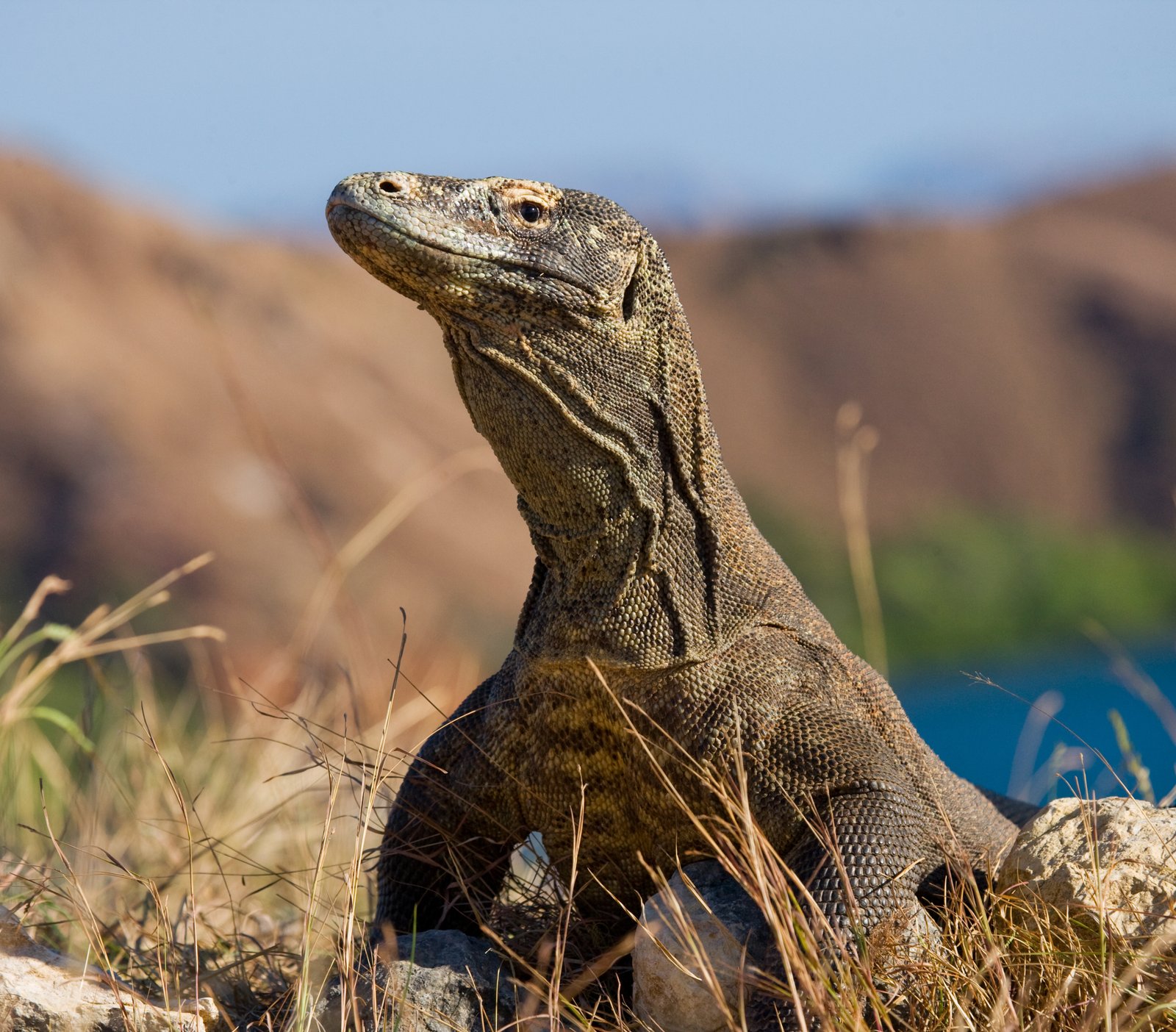
Thousands of kilometers away, Komodo National Park provides a completely different wildlife experience.
Here, travelers can encounter Komodo dragons while exploring an environment of dry islands, beaches, hills, reefs, and open ocean.
The contrast between these two environments is remarkable. One wildlife journey happens inside humid rainforest. The other takes place among dry islands surrounded by sea.
The Ocean Is Just as Important as the Land
With thousands of islands, Indonesia’s natural environment cannot be understood without spending time on the water.
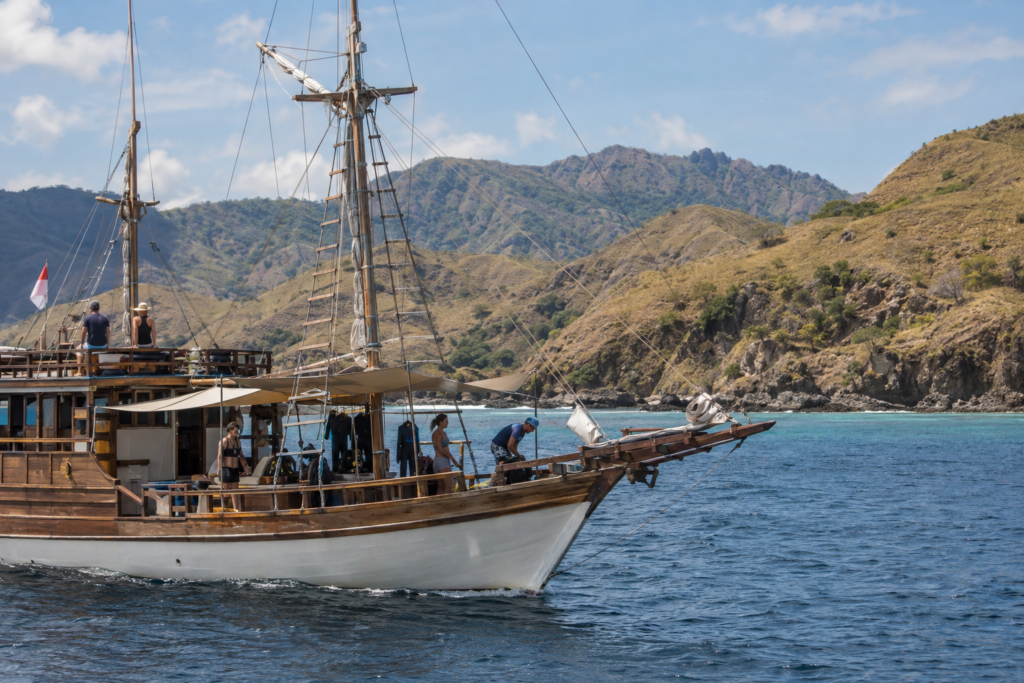
Around Flores and Komodo, boat travel is one of the defining experiences.
A multi-day sailing journey can connect hiking trails, beaches, snorkeling locations, wildlife areas, and viewpoints without returning to the same hotel every evening.
The boat becomes both transportation and part of the adventure.
Travelers can wake up near a new island, hike in the morning, snorkel later in the day, and watch the coastline change again before sunset.
Komodo National Park is well known for its dragons, but the wider area also includes reefs, clear coastal waters, rugged islands, and marine activities. Travel With Dee currently presents Flores and Komodo as a destination combining wildlife, snorkeling, island scenery, and boat travel.
Similar experiences can be found elsewhere in the archipelago.
Sulawesi is known for marine environments and biodiversity, while Lombok combines tropical coastline with access to smaller islands and outdoor experiences on land.
For travelers who enjoy both mountains and the sea, Indonesia makes it possible to experience both without choosing only one.
Adventure Does Not Always Mean Extreme
One of the best things about adventure travel in Indonesia is that it can take many forms.
You do not have to climb the highest mountain or spend every day doing physically demanding activities.
Adventure might mean waking up early enough to see a volcanic landscape before sunrise.
It might mean spending three days aboard a wooden boat in the rainforest.
It could mean snorkeling above coral, walking through a village, crossing between islands by boat, descending toward a waterfall, or following a trail through tropical forest.
Some travelers will want difficult treks and long active days.
Others may prefer easier walks, scenic boat journeys, wildlife encounters, and time spent exploring at a slower pace.
Both can be part of an adventure.
The important thing is choosing experiences that allow you to connect with the environment instead of simply moving from one attraction to another.
You Can Combine Adventure With Slower Travel
Active trips become more enjoyable when there is contrast between demanding and slower days.
After a volcano hike in Java, a quieter afternoon can give you time to recover and experience a different side of the region.
After trekking in Lombok, spending time near the coast can completely change the pace.
A journey through Bali can combine outdoor activities with temples, local food, rice terraces, or slower days in smaller towns.
Boat journeys naturally create this contrast.
A day around Komodo may include hiking and snorkeling, but there are also hours spent moving quietly between islands.
In Borneo, wildlife exploration is broken up by long stretches of river travel.
These slower moments are not wasted time.
They allow you to watch the landscape change.
Nature and Local Culture Often Exist Side by Side
Another reason Indonesia works well for nature travelers is that outdoor experiences rarely exist completely separate from local life.
A road toward a volcano might pass through farming villages.
A journey through Bali may move between temples, rice terraces, waterfalls, and local communities within the same day.
In Lombok, natural landscapes sit alongside communities where Sasak traditions remain part of everyday life.
Sulawesi offers an even stronger example of this connection. A journey can combine marine environments and wildlife with highland communities and the cultural landscape of Toraja.
Travel becomes more interesting when the landscape is not treated as an isolated attraction.
Understanding how people live around mountains, forests, rivers, and coastlines adds another layer to the experience.
Multi-Day Journeys Let You Go Deeper
Some environments simply work better when you give them more than one day.
A multi-day Komodo sailing trip allows the journey between islands to become part of the experience.
A Borneo klotok trip keeps you inside the rainforest environment instead of returning to a city every evening.
A trek on Mount Rinjani allows travelers to experience changes in elevation, vegetation, temperature, and light that cannot be understood from a single viewpoint.
Longer overland journeys through Java can connect temples, waterfalls, volcanoes, villages, and cities into one continuous route.
Travel With Dee currently runs a longer Java, Bali, and Flores itinerary that moves from Yogyakarta through Tumpak Sewu, Bromo and Ijen, crosses into Bali, and continues to a Komodo cruise.
This kind of journey shows why Indonesia is especially well suited to travelers who enjoy seeing how different landscapes connect.
Every Region Can Feel Like a Different Trip
One of Indonesia’s greatest advantages is that returning to the country does not necessarily mean repeating the same experience.
A first trip might focus on Java and Bali.
Another journey could be built around Flores, Komodo, and Lombok.
A wildlife-focused trip could take you into Borneo.
Someone interested in marine life and local culture might choose Sulawesi.
The regions currently covered by Travel With Dee reflect that diversity, including Java, Bali, Flores, Lombok, Sulawesi, and Borneo.
Each one can support a completely different style of adventure.
That makes Indonesia particularly interesting for travelers who prefer exploring a country gradually instead of trying to see everything in one visit.
Nature Also Requires Flexibility
Outdoor travel comes with one important reality: nature does not follow your itinerary.
Clouds can hide a sunrise.
Rain can change trail conditions.
Sea conditions may affect a boat route.
Wildlife sightings can never be guaranteed.
Visibility underwater can change.
This uncertainty should not necessarily be seen as a problem.
It is part of experiencing natural environments.
A good adventure itinerary leaves enough flexibility for conditions to change without ruining the entire journey.
This is especially important for sailing, trekking, wildlife experiences, and remote destinations.
Travelers should also follow local guides, park regulations, wildlife rules, and safety instructions whenever activities take place in protected or unfamiliar environments.
Travel With Respect for the Places You Explore
Beautiful landscapes stay beautiful only when visitors treat them carefully.
Avoid leaving rubbish behind on trails or beaches.
Do not touch coral while snorkeling.
Keep a respectful distance from wildlife and follow ranger instructions.
Avoid feeding wild animals.
Respect communities, religious sites, local customs, and private spaces.
Use experienced local guides where they are required or helpful.
Small choices can make a significant difference when many travelers visit the same natural environments.
Adventure should be about experiencing a place, not changing it for the worse.
Why Indonesia Works So Well for Nature and Adventure Travelers
Indonesia does not offer just one famous mountain, one famous beach, or one national park.
Its strength comes from variety.
Volcanoes and waterfalls shape Java.
Rainforest rivers define parts of Borneo.
Rugged islands and coral reefs surround Komodo.
Mountains rise above the coastline of Lombok.
Bali combines tropical landscapes with cultural experiences.
Sulawesi brings together marine biodiversity, wildlife, highlands, islands, and distinctive traditions.
You can build a journey around one of these environments or combine several of them.
For nature and adventure travelers, that creates something special.
The next landscape is rarely the same as the last one.
One morning might begin on a mountain trail. Another can begin on the deck of a boat surrounded by islands. A few days later, you could be traveling slowly through a rainforest river.
That variety gives every journey room to become its own story.
Start Exploring Indonesia With Travel With Dee
The best nature adventure does not need to include every destination.
It needs the right combination of places, activities, and travel pace for you.
Travel With Dee creates personalized journeys and small-group experiences across several regions of Indonesia, with trips designed around different interests and travel styles. The current website highlights tailored itineraries, local expertise, small-group travel, and support with logistics such as accommodation, private transportation, domestic connections, guides, and route planning.
Whether your ideal Indonesia trip involves volcanoes, rainforest, wildlife, islands, snorkeling, waterfalls, or a mixture of everything, there is always another side of the country waiting to be explored.
Explore available trips at travel-withdee.com or contact Travel With Dee on WhatsApp to start planning your journey.